
No hot water
Electric: failed element or thermostat, tripped breaker, wiring fault. Gas: pilot or ignition failure, gas control valve issues, or a safety shutdown related to venting or combustion air.
Serving San Antonio, Texas & surrounding areas
Water Heater Repair · San Antonio
Get hot water back fast with a focused diagnosis, clear options, and workmanship that holds up. We handle leaks, no-heat issues, and safety-related faults on gas and electric units.
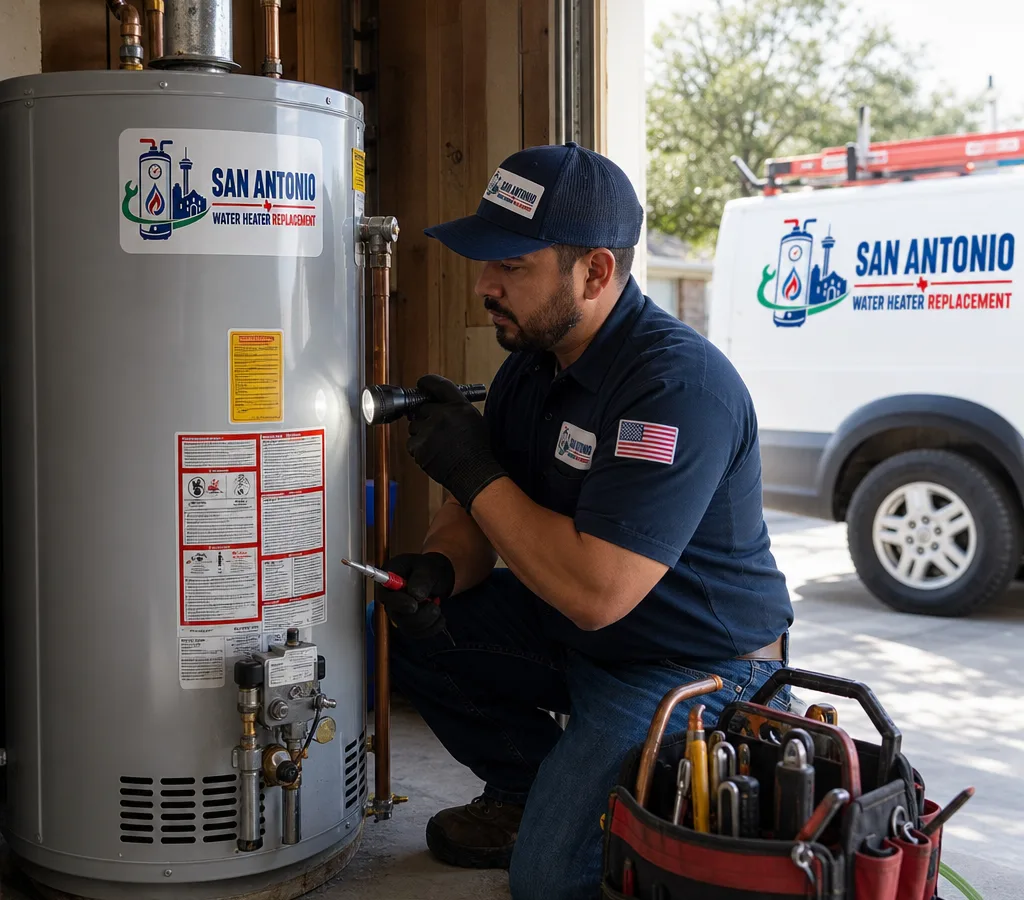
If you searched for water heater repair in San Antonio, you probably have one of three problems: no hot water, a leak at the tank or piping, or a unit that keeps tripping a safety control. Our technicians troubleshoot the cause first, then explain what is actually failing and what it takes to fix it.
We work on common tank-style water heaters as well as many tankless systems. Typical repairs include replacing electric heating elements, thermostats, gas control valves, igniters, thermocouples, T&P relief valves, and recirculation components, plus fixing leaks at shutoff valves, unions, and flex connections. If repair is not the safe or cost-effective path, we will say so plainly and walk you through next steps.
San Antonio homes often have water heaters tucked into tight garage corners, closets, or attic platforms. Access and ventilation matter for safe repairs, especially on gas units where draft, combustion air, and flue connections must stay correct after the work is done.
Focused Diagnosis
A good repair starts with the right checks. For a tank water heater, we confirm the basics and then move into component testing.
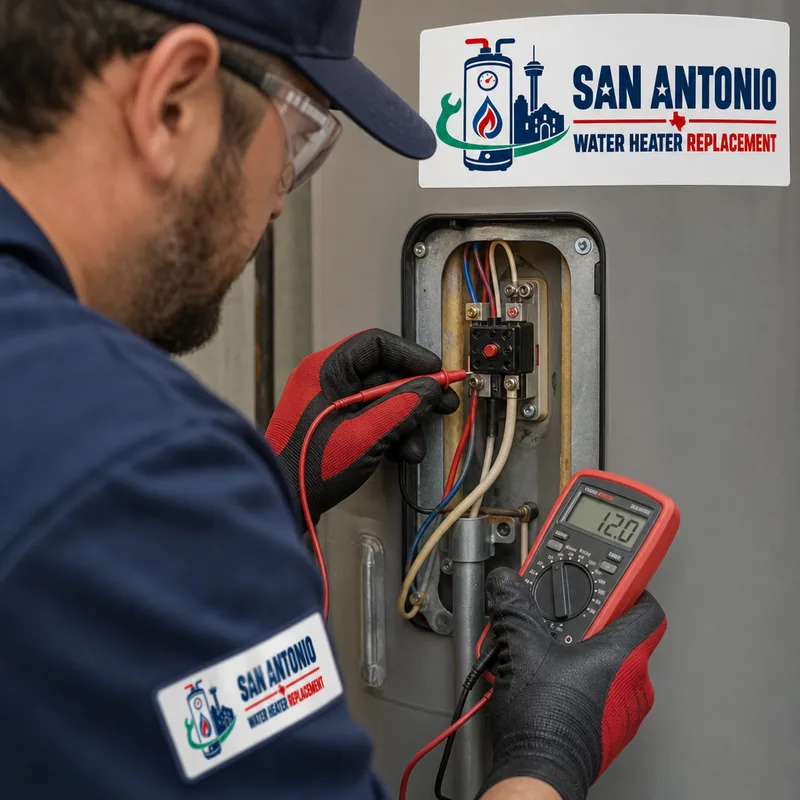
For electric water heaters we verify power at the breaker, check voltage at the unit, test the upper and lower thermostats, and ohm out the heating elements. A failed element can cause lukewarm water or a tank that runs out quickly, while a thermostat issue can cause no heat or overheating.
For gas water heaters we check the pilot or ignition sequence, status lights or error codes when present, and gas control valve operation. We also inspect the vent connector and draft because a venting issue can trigger safety shutdowns. If you smell gas, stop using the appliance and have a qualified technician assess it.
Leaks get traced to the true source. A wet area under the tank could be a loose drain valve, a sweating fitting, a failed T&P valve, or a tank that has corroded through. The fix depends on where the water originates, not where it ends up on the floor.
Symptoms We Troubleshoot
Electric: failed element or thermostat, tripped breaker, wiring fault. Gas: pilot or ignition failure, gas control valve issues, or a safety shutdown related to venting or combustion air.
Sediment buildup, one heating element out, incorrect thermostat settings, dip tube problems, or a tankless flow or scale issue. We diagnose so you are not paying for guesswork.
We pinpoint whether the leak is at a fitting, drain valve, T&P valve or discharge line, or the tank itself. A tank leak usually means replacement is the safe call.
Often tied to sediment and overheating at the bottom of the tank. We will advise whether a flush or descale and component check is appropriate for the unit’s condition.
This can point to corrosion inside the tank or a depleted anode rod. We confirm the source and whether repair is worthwhile versus putting money into an aging tank.
A T&P valve should not drip continuously. We check system pressure and expansion conditions, then address the valve and root cause so it stays safe and compliant.
Local Repair Considerations
Repairs in San Antonio often come down to access, code-safety checks, and how quickly the problem is damaging the surrounding area.
Older homes in neighborhoods like Alamo Heights and Monte Vista can have tight mechanical closets, older shutoff valves, or legacy venting layouts. That does not make repairs impossible, but it does mean we plan for careful disassembly and re-sealing. We may recommend updating a worn shutoff valve or flex connector when it is a clear reliability risk.
In Stone Oak and other north-side areas, many houses use garage installations with finished walls and storage packed around the unit. We protect nearby items, keep clearances in mind, and verify the pan and drain setup if the heater is in a location where a leak could damage drywall or flooring.
Downtown and near the urban core, condos and multi-family buildings can require coordination. If access is controlled by a building office or there are restrictions on water shutoffs, we help plan the timing so the repair does not become an all-day disruption.
When a water heater is beyond repair, we can still help you make a clean decision and explain what replacement would look like for your setup so the same failure is less likely to repeat.
Planning Your Repair
Water heater repair in San Antonio typically ranges from about $175 to $850, depending on whether the fix is a straightforward valve, thermostat, or element swap or a more involved gas control, ignition, or tankless component repair. Small leak repairs at fittings can be on the lower end, while troubleshooting plus specialty parts, especially on tankless units, can land higher.
Your final price depends on the heater type, the exact failed part, access such as attic or closet versus an open garage, and whether corroded connections add labor. We confirm the scope and price after an on-site diagnosis so you can decide before work starts.
We ask a few targeted questions—gas versus electric, symptoms, and any visible leaking—so the technician arrives prepared with the right common parts.
We isolate the issue, test components, and inspect the basics that affect safety: shutoff operation, venting on gas units, and proper relief valve and discharge line condition.
You get a plain-language explanation of what failed, what we recommend, and what it will cost. If replacement is the smarter move, we explain why.
After the repair we verify normal operation, stable ignition, and leak-free connections, then leave the area clean. You also get guidance on what to watch for as the tank cycles.
Practical Answers
If the tank itself is leaking, replacement is usually the safe and practical answer because a corroded tank cannot be reliably repaired. If the leak is from a valve, fitting, or the T&P relief valve, repair is often straightforward once the true source is confirmed.
Many repairs restore heat immediately, but the tank still needs time to reheat the water. A typical tank water heater often needs around 30 to 60 minutes to produce a usable amount of hot water after power or gas is restored, with longer times for full recovery depending on tank size and incoming water temperature.
Repeated breaker trips are commonly caused by a shorted heating element, damaged wiring, or a failing thermostat. Because this is an electrical safety issue, the right next step is a proper diagnostic with meter testing at the heater and circuit before replacing parts.
A pilot that will not stay lit is often tied to a failing thermocouple or thermopile, a dirty burner assembly, or a gas control problem. Avoid repeated relighting attempts if you smell gas or see scorching, and have a qualified technician inspect the burner and controls.
Yes, many tankless issues are repairable, including ignition problems, flow sensor faults, and scale-related performance problems. Tankless repairs often depend on model-specific parts and error codes, so having the unit information available can speed up diagnosis and scheduling.
If you have an active leak, shutting off the cold-water supply to the heater can limit damage, and turning off power to an electric heater prevents element damage when the tank is low. If you are unsure which valve or breaker controls the heater, leave things as-is and tell us what you are seeing so we can guide the next safe step.
Tell us what the unit is doing and what you have noticed—leaks, noises, error lights, or temperature changes. We will schedule a repair visit, pinpoint the cause, and give you a clear plan to restore reliable hot water.