
Right-size the unit for real use
We base sizing on how many fixtures may run at once and the type of fixtures you have, so performance matches real life instead of guesswork.
Serving San Antonio, Texas & surrounding areas
Tankless Water Heater Installation · San Antonio
Get consistent hot water with a clean, code-ready install. We size the unit, verify gas and venting requirements, and leave you with a setup that is safe, serviceable, and built for daily use.
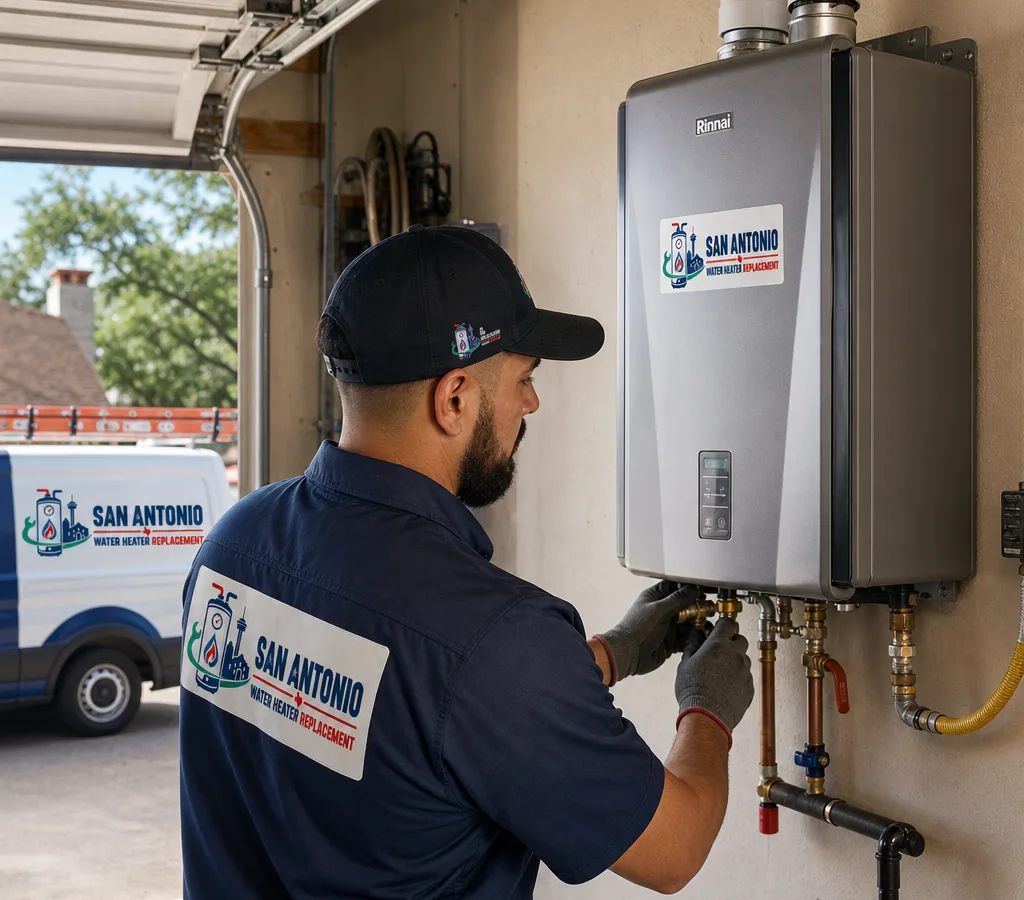
If you’re searching for tankless water heater installation San Antonio TX, you’re probably after one thing: dependable hot water without waiting for a tank to recover. A tankless system can do that, but only when it’s installed and sized correctly for your home’s demand and the unit’s fuel type.
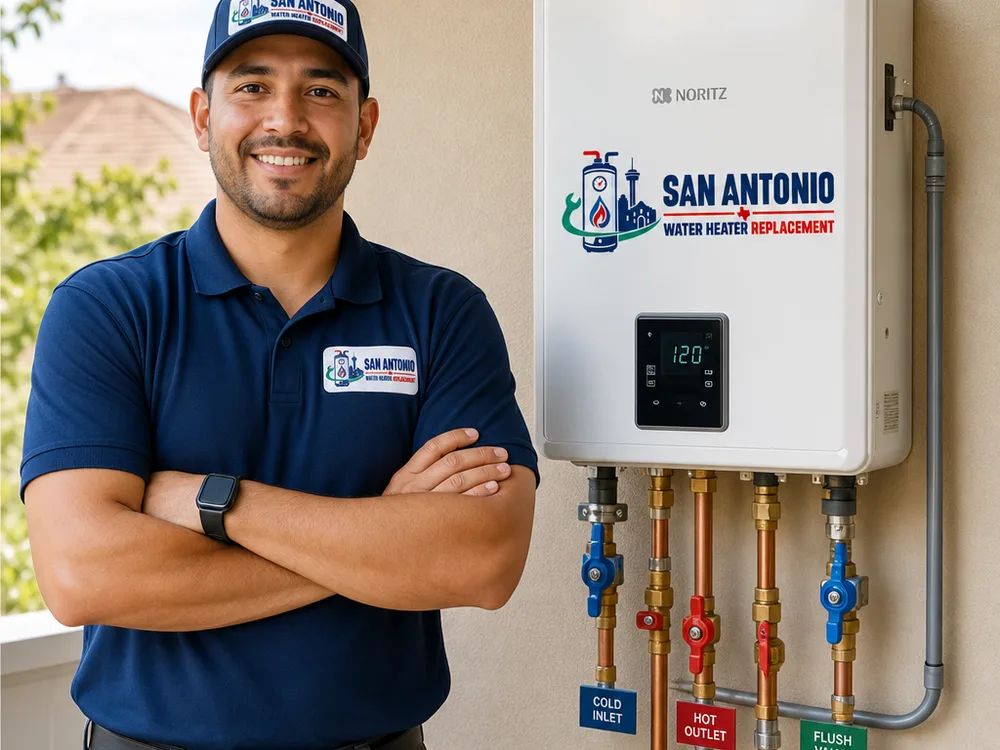
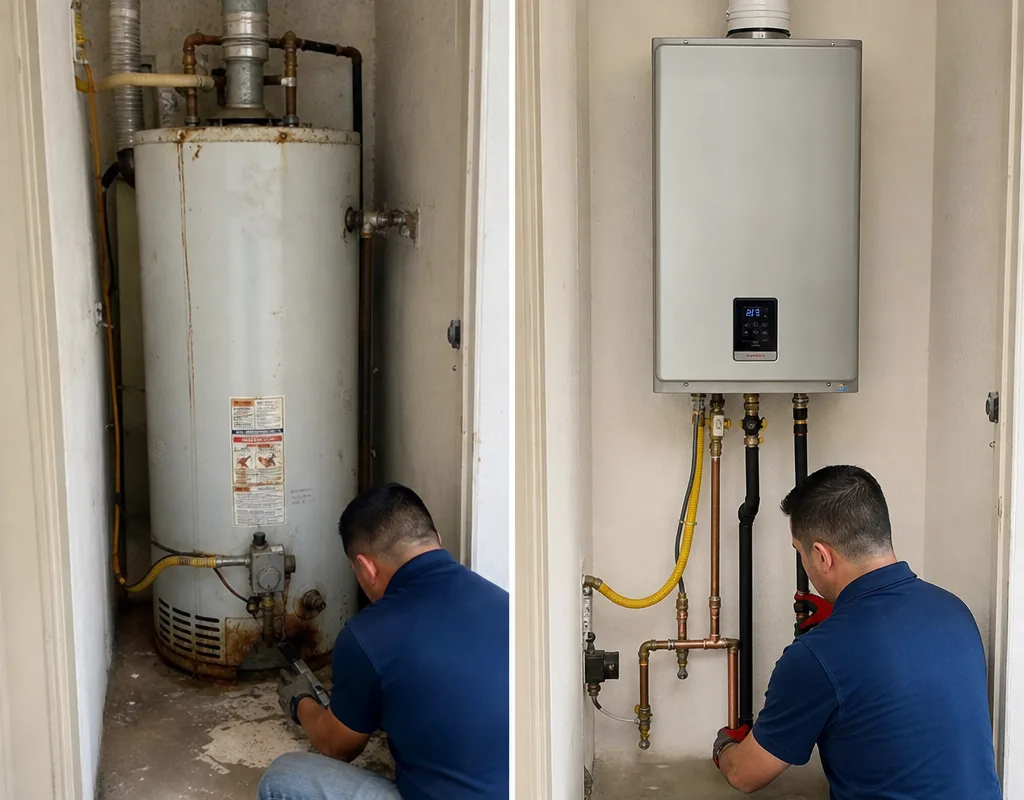
A proper installation is more than hanging a box on the wall. It typically includes confirming the right capacity for your fixtures, setting the unit on a stable mounting surface, installing service isolation valves for flushing and future maintenance, routing the condensate drain on condensing models, and confirming safe combustion air, venting, and gas or electrical supply.
The most common problems after rushed installs are practical: undersized units that struggle during showers, incorrect venting materials or routing, missing service valves that make maintenance difficult, and gas-supply limitations that were never addressed. Our goal is a tidy, accessible installation that meets manufacturer requirements and local expectations for safe operation.
Installation Scope
We base sizing on how many fixtures may run at once and the type of fixtures you have, so performance matches real life instead of guesswork.
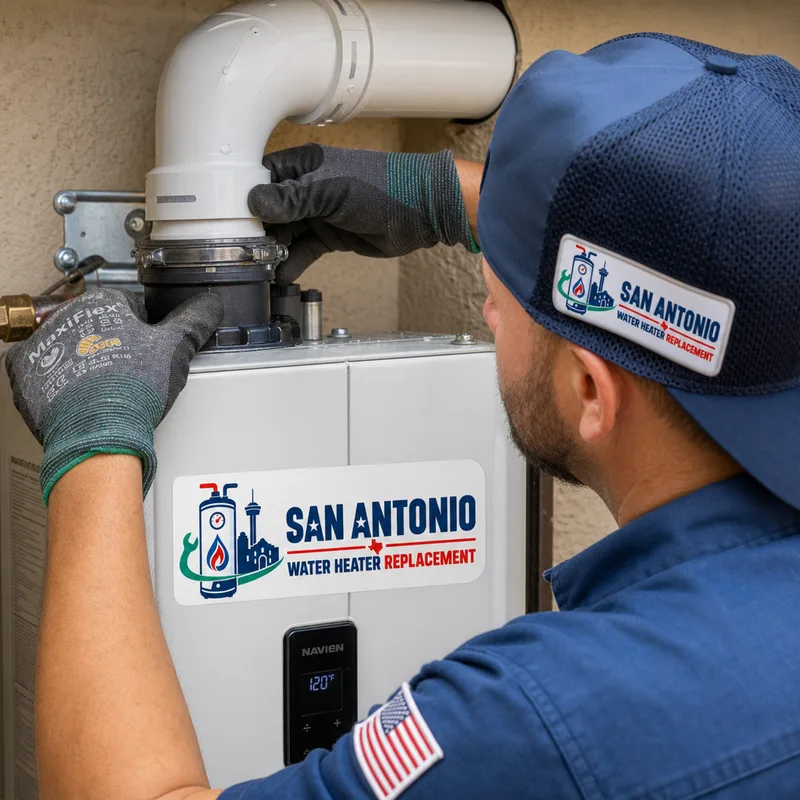
Tankless units have specific venting, termination, and clearance requirements. We follow the manufacturer’s installation instructions and keep the unit serviceable.
We install proper shutoffs, unions, and isolation valves, then route condensate correctly on condensing models to avoid corrosion and water damage.
If the install needs a gas-line adjustment, electrical work, or vent changes, you’ll get a clear scope before work starts.
We protect the work area, keep routing as neat as the space allows, and leave you with an installation that is easy to access later.
Options and Fit
Tankless units are compact, but the connections around them are not optional. In many San Antonio homes, the deciding factors are the vent route and available gas supply.
Venting: Tankless units require specific venting materials and termination rules, which can affect where the heater is placed. A direct path to an exterior wall often simplifies the job. Longer or more complex vent runs can increase labor and may require additional components.
Gas supply: Many gas tankless models need higher BTU input than a traditional tank heater. That does not automatically mean your home cannot support one, but we must confirm gas-line sizing and the load of other appliances. If an upgrade is required, we explain the options so you can make a practical decision.
Placement: Garages, utility rooms, and exterior-wall locations are common, but the best placement allows safe venting, correct clearances, and accessible service. We’ll help choose a location that keeps the installation clean and future maintenance straightforward.
If you’re comparing overall options, our team at San Antonio Water Heater Replacement can walk you through tankless versus tank-style considerations without pushing you into a system that does not fit the home.
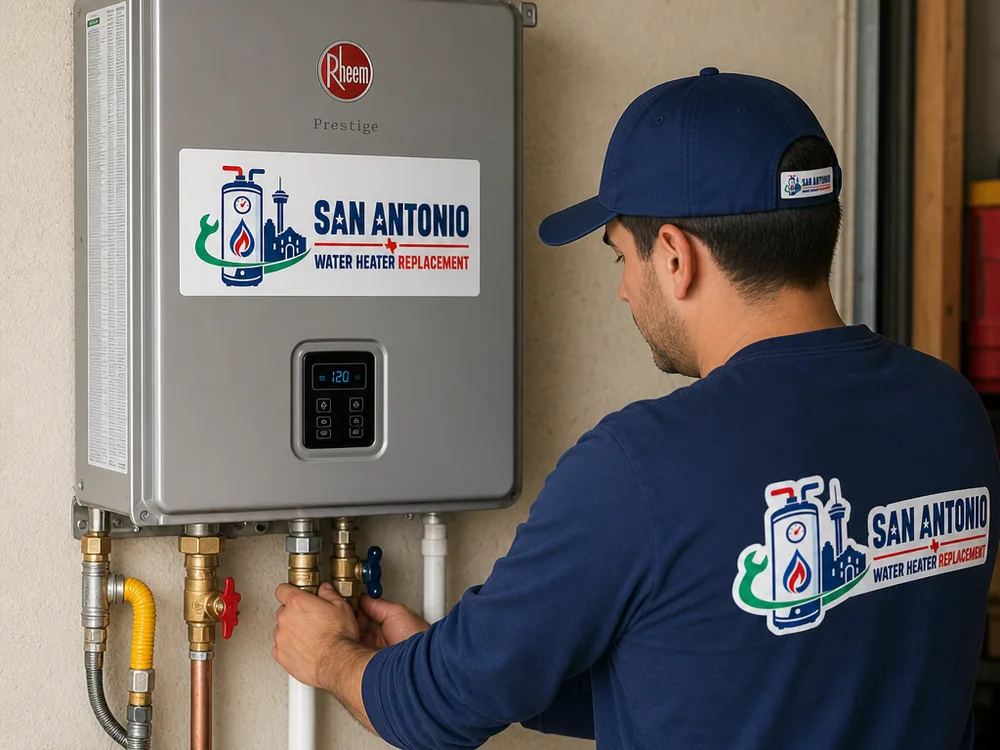
We review your hot-water demand, fuel type, existing venting location, and where the unit can be mounted with required clearances.
We verify water shutoffs, gas-line capacity where applicable, electrical needs, and the best vent and condensate path for the chosen model.
For replacements, we isolate water and fuel, safely disconnect the old unit, and prepare the area for a clean installation.
We mount the unit, install service valves, connect water and fuel, set up venting per the manufacturer, and run condensate on condensing models.
We start the system, check for leaks, verify combustion and venting basics, confirm temperature settings, and make sure you know how to operate the controls.
Planning Your Installation
Most tankless water heater installations in San Antonio typically range from about $2,500 to $6,500+, depending on the unit type—gas or electric—venting requirements, and whether utility upgrades are needed. A straightforward replacement where venting and gas supply already work for the new unit often lands toward the lower end, while new vent runs, gas-line work, condensate routing, or electrical upgrades push the price higher.
Your final price depends on capacity sizing, installation location, vent length and termination, permit needs where applicable, and how much piping must be reworked. The exact cost is confirmed after an on-site assessment of the existing setup.
Installation Details
Practical Answers
Sometimes, yes. Many gas tankless units need more input than a standard tank heater, so we verify gas-line sizing and the load of other gas appliances before installation. If the existing line is undersized, we’ll outline what needs to change and why, so you can decide whether to proceed or consider a different unit.
Often it can, as long as the mounting location meets the manufacturer’s clearance requirements and the venting and combustion-air rules can be met. Garage installs are common because they can provide good service access, but the vent termination location and routing still drive what is practical.
A straightforward replacement is often completed in a single visit, while installations that require new vent routing, gas-line adjustments, or electrical changes can take longer. The timeline depends on how close the existing setup is to what the new unit requires.
Yes. Most manufacturers recommend periodic maintenance, and flushing is a common part of it, which is why we install isolation and service valves as part of a proper setup. Maintenance needs vary by model and water conditions, but planning for access during installation saves time later.
It depends on your home’s utilities and hot-water demand. Gas units often fit higher-demand situations, while electric units can work well where electrical capacity supports them and venting is a concern. We’ll help compare what each option requires in your specific space before you commit.
Yes. Converting from tank to tankless is common, but it usually involves changes beyond the unit itself, such as venting, gas-supply verification for gas models, and condensate routing for condensing units. We confirm what your current setup can support and price the work based on what actually has to change.
Tell us what you have now and what you want to improve. We’ll check venting, gas or electrical requirements, and placement, then give you a clear scope for tankless water heater installation in San Antonio.