Upfront repair plan
We explain what failed, what the repair includes, and what it will cost before we start. If we find additional issues during disassembly or testing, we stop and review options.
Serving San Antonio, Texas & surrounding areas
Tankless Water Heater Repair · San Antonio
No hot water, error codes, or fluctuating temperature? Get a clear diagnosis, upfront pricing, and fast scheduling to get your tankless unit running safely again.
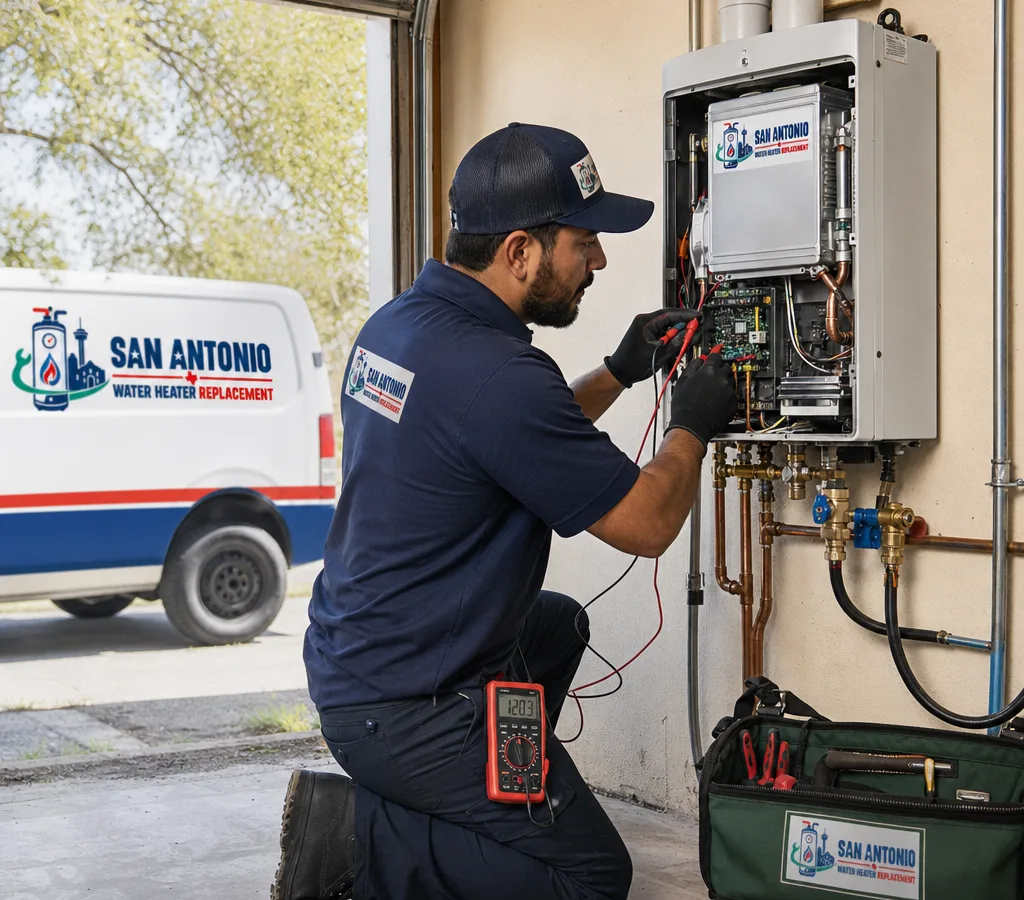
When a tankless unit stops producing hot water, the problem is usually specific and fixable: ignition failure, scale buildup, a blocked intake or exhaust, a dirty inlet filter, a failed flow sensor, or a venting or gas supply issue that triggers a safety shutdown. Our team focuses on dependable tankless repair when the shower turns cold or the unit starts throwing codes.
We work on common residential tankless systems and approach repairs methodically: confirm the complaint, verify safe operation—including gas, combustion air, venting, and water pressure—pull stored fault history, and repair the root cause. You receive a written explanation of what failed, what we recommend, and what it costs before work starts.
Many San Antonio homes have heaters in garages or exterior utility areas. Heat, dust, and fluctuating temperatures can accelerate clogged air screens, dirty burners, and sensor problems. For units mounted outside or near a driveway, maintenance and cleaning can make the difference between repeat lockouts and steady hot water.
A Careful Repair Visit
We explain what failed, what the repair includes, and what it will cost before we start. If we find additional issues during disassembly or testing, we stop and review options.
Tankless heaters are sensitive to water flow, gas pressure, and venting. We diagnose in the right order so parts do not get replaced blindly.
We verify combustion and venting basics, look for signs of exhaust recirculation, and confirm the unit shuts down correctly on safety limits.
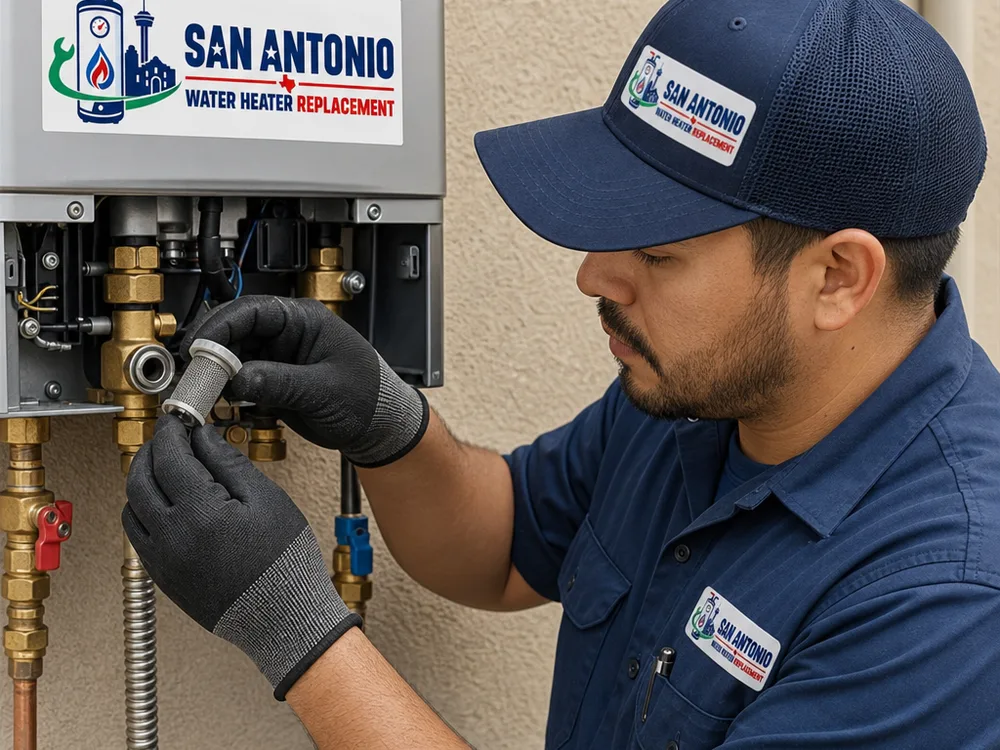
Cleaning inlet screens, flushing scale when needed, and correcting flow restrictions can restore stable temperature and help the heater run as designed.
If the heat exchanger is compromised or parts availability makes repair impractical, we explain replacement paths in plain terms so you can decide confidently.
Symptoms We Troubleshoot
A tankless unit is a controlled combustion system that heats water on demand, so most failures fall into a few recognizable categories:
No hot water or failure to ignite: We check incoming power, gas supply, ignition components, and flame sensing. Low gas pressure, a dirty burner, or failed ignition parts can cause repeated failed starts.
Hot-cold temperature swings: Clogged inlet filters, scale, undersized or failing recirculation components, and inaccurate sensors can disrupt flow. We confirm flow and verify settings.
Error codes and lockouts: Codes identify the system protecting itself. We review code history, confirm correct venting, and test the related sensor circuits.
Venting or combustion-air problems: Blocked intake screens, improper terminations, or negative pressure can shut the unit down, particularly where garage storage crowds the intake.
Scale buildup: Mineral scale restricts heat transfer and can trigger overheating faults. When symptoms point to scale, we recommend descaling and investigate why buildup is progressing quickly.
Leaks: We inspect isolation valves, service ports, internal fittings, and relief discharge paths. If the heat exchanger is leaking, we clearly explain what that means for repair versus replacement.
If you are comparing long-term options, our team can also discuss water heater replacement in San Antonio without turning a repair visit into a sales pitch.
Tell us what is happening—no hot water, a display code, temperature swings, banging sounds, or a leak. Sharing the exact code helps us arrive prepared.
We verify safe operation, check water flow and pressure, inspect intake and venting, and test components tied to the failure, including sensors, igniter, fan, gas valve, and control board.
You receive a clear scope showing what we will repair, which parts are involved, and the total price before work starts.
After repairs, we run a hot-water demand test, confirm stable outlet temperature, and recheck for leaks, proper exhaust, and normal shutdown.
We explain simple habits that help prevent repeat failures, including keeping intake screens clear, scheduling periodic flushing when appropriate, and moving storage away from ventilation areas.
Planning Your Repair
Tankless water heater repair in San Antonio typically ranges from about $175 to $900, depending on the fault and parts needed. Minor fixes like cleaning a clogged filter or correcting a simple flow or sensor issue can be on the lower end, while replacing control boards, fans, gas valves, or multiple sensors usually lands higher.
Final price depends on diagnostic time, part availability for the exact model, access to the unit, and whether scale buildup requires a flush and additional service parts. The exact cost is confirmed after an on-site diagnosis and a written repair plan.
Practical Answers
Many tankless repairs can be completed the same day when the issue involves diagnosis and correction, such as filters, intake cleaning, settings, or minor parts, but some jobs depend on model-specific parts availability. Sharing the brand and displayed error code when scheduling can help reduce delays.
A reset is reasonable as a one-time step, but repeated resets usually mean the unit is protecting itself from ignition failure, venting restrictions, scale-related overheating, or sensor faults. If the code returns, stop cycling power and have the unit diagnosed.
Hot-cold swings commonly come from inconsistent water flow, scale on the heat exchanger, a dirty inlet filter, or a failing flow or temperature sensor. We confirm fixture flow, inspect filters and isolation valves, and test sensors and burner modulation.
Garage or exterior utility installations often collect more dust and debris at the air intake and can be affected by nearby storage blocking airflow. Wider temperature swings may also expose weak sensors or connections, so cleaning and airflow corrections can prevent repeat lockouts.
Descaling is maintenance, but it becomes part of a repair when scale causes overheating faults, reduced hot water, or temperature instability. If testing points to scale, a flush can restore heat transfer and prevent safety-limit trips.
Replacement can be the better path when the heat exchanger leaks, repair parts are unavailable, or repair cost approaches the value of a newer unit. We explain the specific failure and provide repair and replacement options based on condition and budget.
If your tankless unit is throwing codes, cycling hot and cold, or not igniting, we will pinpoint the cause and give you a clear, written repair plan with upfront pricing before any work starts.